Case study · Founder
Kritira: taking my hometown's art to the world. Every line of it.
- Role
- Co-founder · product, design & engineering
- Timeline
- 2025 — present
- Stack
- Next.js · Postgres · Razorpay
- Status
- Live & selling

01 · The problem
Real art, fake economics.
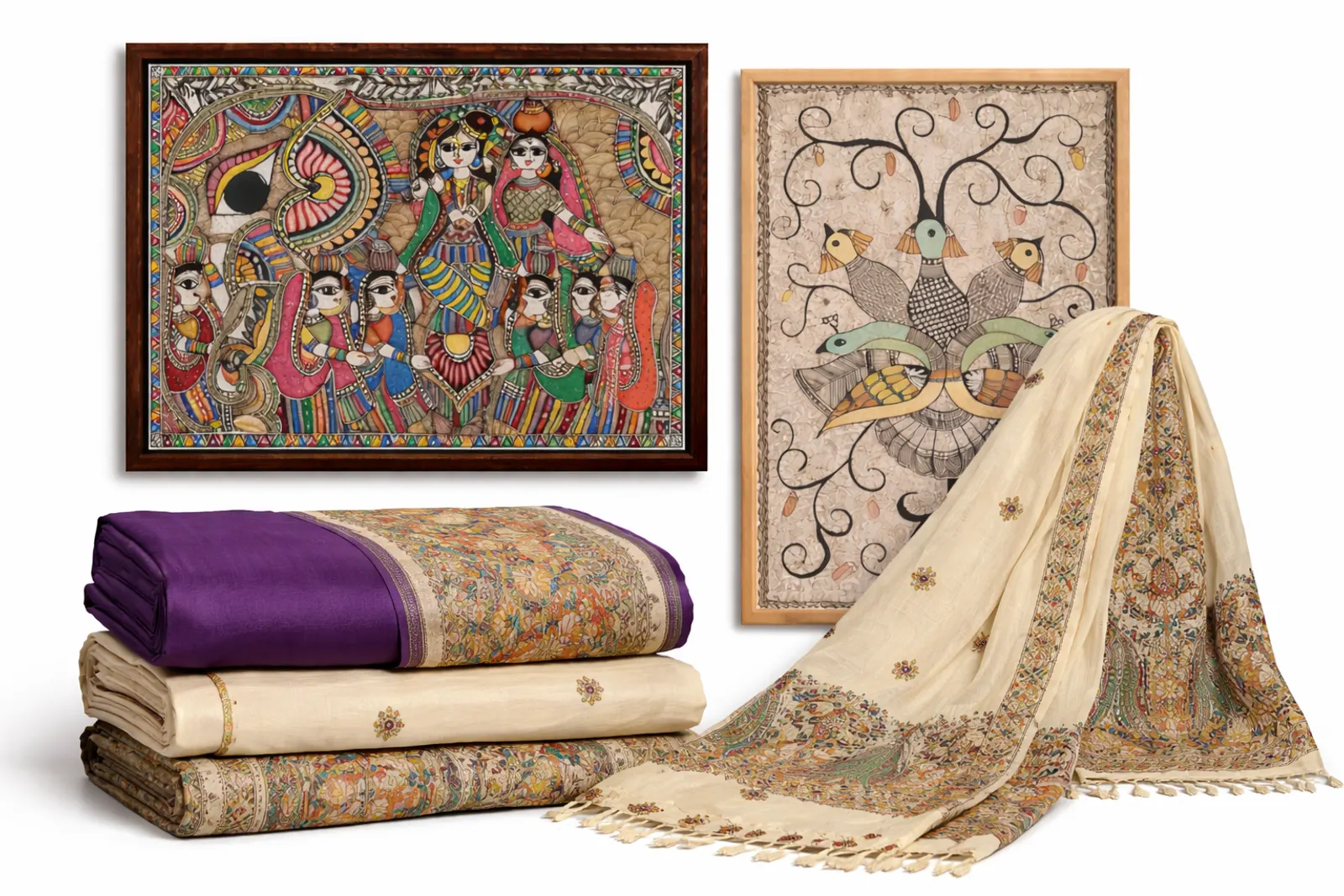
In Madhubani, where I grew up, Mithila painting isn't a product — it's what you do to a wall before a wedding. Today the style sells everywhere, mostly as printed copies, while the artists who actually paint it earn a fraction of the price.
Buyers who want the real thing can't easily tell what's authentic. And the artists — many of them women painting from home — can't easily reach those buyers.
Kritira sits in the middle, honestly: authentic pieces straight from master artists, fair pay, and a certificate of authenticity with every order.
02 · What we built
A direct-to-buyer brand for Mithila art.
An e-commerce brand for authentic Madhubani paintings, hand-painted sarees and dupattas — fair pay for artists, a certificate of authenticity with every piece. Customers can browse by artist, commission a custom piece, and see a painting on their own wall before they buy.
03 · My role
Co-founder. The whole stack.
I own product, design and engineering — every screen, every table, every deploy. I built it end to end alongside my job at MassMutual India, which is exactly why it had to be simple to run.

04 · Architecture
Boring tech, on purpose.
A small team can't babysit servers. So: one Next.js app on Vercel, Postgres on Supabase through Prisma, and managed services for everything else. It deploys on every push and mostly runs itself.
- Next.js App Router
- TypeScript
- Tailwind CSS
- Prisma
- Postgres (Supabase)
- NextAuth
- Razorpay
- Cloudinary
- Resend
- OpenAI · Gemini
- MDX
- Vercel
05 · Features shipped
What's actually in it.
Storefront
- Server-rendered catalogue — paintings, sarees, dupattas, collections
- “Find your art” discovery, search, wishlist, bestsellers
- Artist profiles, reviews, a Mithila guide and care guide
- MDX blog for stories behind the paintings
Checkout & orders
- Razorpay: UPI, cards, net banking, with webhook verification
- Coupons, painting sizes, packaging and shipping rules
- Order tracking and transactional email via Resend
- Custom commission requests straight to an artist
Admin panel
- Products, orders, inventory, customers, coupons
- Artists, collections, blog, press, pitch-kit
- Instagram, social and ‘making-of’ content
- Everything editable without touching code
AI-assisted listings
- OpenAI & Gemini draft titles, descriptions and SEO copy from a photo
- AI room mockups — see a painting on a real wall before buying
- A human who knows the art always has the final word
Automation
- Daily abandoned-cart emails (Vercel Cron)
- Weekly Pinterest catalogue refresh
- Cloudinary media pipeline with watermarking
Brand & trust
- Certificate of authenticity with every piece
- Fair-pay model, shown on the product page
- Design system rooted in Mithila colour: sindoor, marigold, ivory
06 · Outcomes
What it proves.
- Paintings sold
- 500+
- States delivered to
- 25+
End to end, by one engineer
Design, database, payments, admin, AI tooling and deploys — no agency, no freelancers.
Runs without me watching
Payments, emails and cron jobs run unattended; the team manages every product, artist and post from the admin.
Built on free and pay-as-you-go tiers
The same thinking I bring to small businesses: great software shouldn't come with a scary monthly bill.
07 · Lessons
What running a shop taught the engineer.
- 01
Trust is the product.
Every buyer's first question is “is this really hand-painted?” The certificate, the artist profiles and the making-of content do more for conversion than any discount.
- 02
The admin is the real product.
Customers see the storefront once; we use the admin every day. Making it fast turned hours of weekly busywork into minutes.
- 03
Speed is a sales feature.
Most people arrive on a phone, from Instagram, on patchy data. So the storefront is built for a mid-range Android first and a MacBook second.
- 04
AI drafts. Humans decide.
AI writes the first version of every listing in seconds. Someone who understands the art makes it true.
 kritira.com